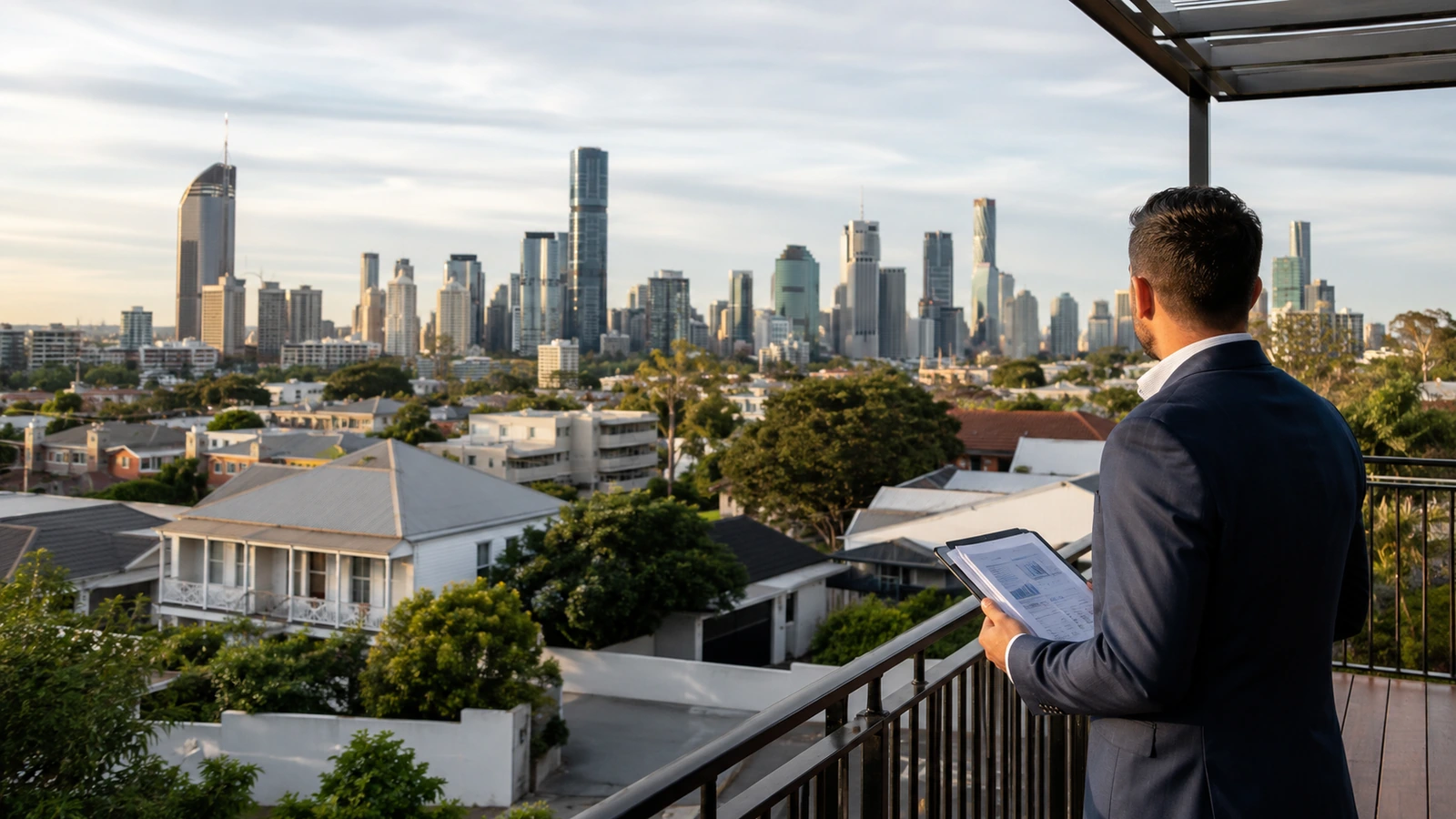
Brisbane has become one of the most talked-about property markets in Australia, and for good reason. Prices have climbed strongly, interstate buyers are paying closer attention, infrastructure is being fast-tracked, and the 2032 Olympics story keeps Brisbane in the headlines.
But a strong market does not make every suburb a strong decision.
That is the part buyers need to sit with for a moment. Brisbane can still have long-term appeal while some suburbs carry more risk than others. A city can grow overall while certain pockets underperform. A suburb can look attractive because it is cheaper, newer, or has already gone up, but that does not automatically make it the right fit for your brief.
This is where the role of a Brisbane buyer’s agent becomes more important. Not because an agent can predict the future. They cannot. But because the right buyer’s agent should help you compare the risks clearly before you commit.
If you are still comparing your options, start with the Brisbane buyer’s agents directory so you can review local experience, services and buying approach before sending enquiries.
Why Brisbane buyers need to look beyond headline growth
The gap between Brisbane and Sydney dwelling values has narrowed significantly in recent years. For many buyers, that is the big signal that Brisbane is no longer the “cheap alternative” it once was.
That does not mean Brisbane is overpriced across the board. It also does not mean buyers should avoid the city. It simply means buyers need to be more selective than they may have been a few years ago.
When a market has already moved strongly, the easy part of the cycle may be behind you. Suburb choice, property type, price point, rental demand and future supply all start to matter more.
This is especially true for investors. A property can still grow, but if another suburb or property type grows faster, the opportunity cost can be large over time. Even a small difference in annual capital growth can become a meaningful difference over 10 or 20 years.
So the better question is not “Is Brisbane still a good market?”
The better question is “Which part of Brisbane fits my budget, risk profile and buying strategy?”
For investors, it can also help to read how to choose a buyer’s agent for investors before speaking with agents, because the right fit often depends on suburb focus, fee structure and investment approach.
What buyers often get wrong when comparing Brisbane suburbs
Many buyers start with broad market confidence. They hear that Brisbane is growing, that Queensland’s economy is strong, that migration is supporting demand, and that infrastructure is improving.
Those points may be relevant, but they are not enough.
Brisbane is not one single market. Russell Island is not the same as Pallara. Pallara is not the same as Capalaba. Capalaba is not the same as Alexandra Hills. Each suburb has a different mix of access, supply, buyer demand, property type, rental depth and long-term appeal.
This is where buyers can make mistakes. They look at recent price growth and assume the suburb is strong. They look at a rental yield and assume the cashflow is safe. They look at a new estate and assume new means lower risk.
The reality is more nuanced.
A suburb can show strong recent growth because it was starting from a low base. A rental yield can look attractive because the area carries higher liquidity risk. A new housing area can feel safe because the homes are modern, but future supply may limit resale competition.
A good buyer’s agent should help you separate surface-level appeal from deeper suburb risk.
Russell Island shows why yield is not enough
Russell Island is a good example of why buyers should never rely on one number.
On paper, some buyers may be drawn to the entry price or yield. Compared with many mainland Brisbane suburbs, it can look more affordable. For investors who feel priced out elsewhere, that can be tempting.
But affordability is not the same as low risk.
Russell Island has access limitations because it relies on ferry transport. That alone changes the buyer pool, rental pool and resale story. The area may still work for some buyers, especially those who understand the risk and have a suitable strategy, but it is not the same as buying in a more connected mainland suburb.
There is also the question of local income growth and long-term demand depth. If a suburb has seen strong price growth but the underlying income base has not improved at the same pace, buyers need to ask what is driving the growth and whether that growth is likely to continue.
This does not mean Russell Island is automatically wrong. Some investors may have done well there. But for a first-time investor or a buyer with limited capacity to absorb risk, the key question is simple: what happens if the market becomes harder to sell into?
That is the type of conversation a Brisbane property buyer’s agent should be willing to have.
Pallara highlights the risk of new supply
Pallara has been popular with buyers looking for newer homes at a more achievable price point than many established Brisbane suburbs. For first-home buyers and investors, that can make sense at first glance.
But the risk in suburbs like Pallara is often supply.
Newer housing corridors can have a lot of similar properties. Similar homes, similar land sizes, similar layouts and similar buyer appeal. When there is more land available or more development still coming, future buyers may have plenty of alternatives.
That does not mean every property in Pallara is a poor decision. It means buyers should understand the supply story before paying a high price.
If an area has many development approvals, new subdivisions or house-and-land style stock, the buyer’s agent should be able to explain how that may affect future competition. They should also be able to explain why one property is better positioned than another.
For example, is the property close to services? Is the land component strong? Is the street more established? Is there owner-occupier demand? Is the rental yield enough for the price being paid?
These questions matter because newer homes can look clean and easy, but investment performance is not based on presentation alone.
Capalaba and Alexandra Hills show why development approvals matter
Capalaba and Alexandra Hills sit in Brisbane’s south-east region and can appeal to families, owner-occupiers and investors. They are established areas with local services and access to broader Redlands and bayside lifestyle markets.
But the transcript raised an important point: development approvals can change the risk profile of a suburb.
This is one of the checks many buyers miss.
They look at the median price, past growth, days on market and vacancy rate. Those numbers are useful, but they do not always show what future supply may look like.
If many blocks are being split, townhouses are being added, or new lots are being created, that can affect the local market over time. One subdivision may not shift a suburb. Many subdivisions across an area can change the amount of stock available, the streetscape, rental options and buyer competition.
For investors, this can be the difference between buying into scarcity and buying into a market where future buyers have a lot of choice.
If Capalaba is on your list, you can also compare local options through the Capalaba buyer’s agents page before speaking with agents.
The Olympics story should not replace due diligence
The 2032 Olympics is often mentioned in Brisbane property conversations. It is understandable. Major events can speed up infrastructure, increase attention and support confidence.
But buyers should be careful not to treat the Olympics as a complete investment strategy.
Infrastructure can help a city, but it does not lift every suburb equally. Some areas benefit more than others. Some benefits are already priced in. Some projects take years to complete. Some may improve lifestyle without creating a strong investment case at the price being paid.
This is why a calm buyer’s agent is valuable.
You do not want someone who dismisses Brisbane’s growth story. You also do not want someone who uses the Olympics as a shortcut to justify every purchase.
The right question is not “Will Brisbane benefit from the Olympics?”
The better question is “How much of that benefit is relevant to this specific property, at this specific price, in this specific suburb?”
What a good Brisbane buyer’s agent should be checking
A good Brisbane buyer’s agent should do more than send listings.
They should help you understand the market, compare options and test the risks before you make an offer. That includes looking at recent comparable sales, buyer demand, rental conditions, days on market, suburb demographics, access to employment, future infrastructure and local supply.
They should also be clear about their buying approach. Some agents are more data-led. Some are stronger negotiators. Some focus on off-market access. Some specialise in investment briefs. Some are better suited to owner-occupiers.
There is no single “best” buyer’s agent for everyone. The best fit depends on what you are buying, where you are buying, how much support you need and how the agent works.
If you are looking at Brisbane as an investor, you may want an agent who can explain both growth and cashflow. If you are a first-home buyer, you may want someone who can guide you through auction, private treaty, building and pest, contract review and negotiation. If you are interstate, you may need stronger inspection support and clearer written reporting.
If you are comparing agents across the state, you can also browse Queensland buyer’s agents to see broader options beyond Brisbane.
Buyer’s agent fees need to be understood in context
Buyer’s agent fees can vary depending on the agent, location, service level and property brief. Some agents charge a fixed fee. Some charge a percentage fee. Some use an upfront retainer and a success fee. Others may have different packages for appraisal, negotiation or full-service search.
The mistake is comparing the price without comparing what is included.
A lower fee may be suitable if your brief is simple and you only need negotiation help. But if you need suburb research, inspections, due diligence, auction bidding, negotiation and settlement support, the cheapest option may not be the best fit.
Before engaging a buyer’s agent in Brisbane, ask what is included, what is not included and what may cost extra. Also ask how they handle properties outside their core service area.
This matters because Brisbane is spread out. An agent who is strong in inner-north houses may not be the right fit for a bayside investment brief or a new-build corridor. Local experience should match the job you are hiring them to do.
For a broader decision framework, read how to choose a buyer’s agent before booking calls.
The questions buyers should ask before shortlisting an agent
Before you book calls with multiple agents, get clear on your own brief. Know your budget, preferred property type, borrowing position and reason for buying.
Then ask each agent how they would assess the market for your situation.
You want to understand whether they can explain risk in plain English. Ask which Brisbane suburbs or regions they know best. Ask what they have purchased recently. Ask whether they work mainly with investors, owner-occupiers or both. Ask how they assess future supply, rental demand and fair value.
A strong agent should not be offended by these questions. In fact, they should welcome them.
The agent who gives the clearest answer is often easier to compare than the agent who sounds the most confident.
Red flags to watch for
Be careful if an agent makes Brisbane sound too simple.
A red flag is an agent who says every part of Brisbane is a good opportunity. Another red flag is leaning too heavily on the Olympics without explaining suburb-level detail.
You should also be cautious if an agent cannot explain their fee structure, avoids discussing risks, pushes urgency too early, or talks about off-market deals without showing how they assess value.
Off-market access can be useful, but it is not automatically a bargain. A property still needs to be assessed on price, location, condition, rental appeal, resale depth and risk.
The same applies to suburb recommendations. A suburb name is not a strategy. The property, street, price and buyer profile still matter.
Green flags to look for
A good buyer’s agent will usually be clear, practical and specific.
They should be able to explain where they buy, what they avoid and why. They should be able to walk you through their process from enquiry to settlement. They should be open about fees and service inclusions. They should be able to explain how they assess fair value before making an offer or bidding at auction.
Most importantly, they should be willing to say when a property is not right.
That is one of the most valuable parts of using a buyer’s agent. Not just finding properties, but filtering out the wrong ones before you lose time, money or confidence.
So, should buyers avoid Russell Island, Pallara, Capalaba or Alexandra Hills?
Not automatically.
That would be too simple and not very useful.
Each of these suburbs may suit some buyers and not others. The right answer depends on your budget, goals, risk tolerance, finance position, timeframe and the specific property.
The better takeaway is this: do not buy into a suburb just because the broader Brisbane market has been strong.
Do the checks. Understand the supply. Compare the yield with the price. Look at access and employment. Review local demand. Ask what could go wrong. Then decide whether the property still makes sense.
If you are using a buyer’s agent, make sure they can guide you through that process clearly.
The next step for Brisbane buyers
Brisbane still has many reasons buyers are paying attention. But the market has matured, and that means the quality of your decision process matters more.
Before choosing a property, choose your comparison criteria. Before choosing an agent, understand their service scope. Before trusting a suburb recommendation, ask how the risk has been assessed.
A good buyer’s agent can help you move faster, but the right fit should also help you slow down at the right moments.
That is where better buying decisions are made.
Ready to compare Brisbane buyer’s agents?
Compare Brisbane buyer’s agents by local experience, fee structure, services and buying approach. Shortlist the agents that fit your brief, then send enquiries directly.
BuyerAgentFinder is a comparison and introduction service. Information is general and does not consider your personal situation. Confirm fees, services and suitability directly with the buyer’s agent.